House Pad Grading and Building Pads in West Palm Beach, FL
Precision building pad grading for residential and commercial projects across Palm Beach County
Free Fast Quote
Please fill out this form to request a free quote on your upcoming project and we will respond to you right away!
Who This Service Is For
Building pad grading services in Palm Beach County are essential for general contractors, custom home builders, developers, commercial property owners, and anyone preparing a site for new construction throughout Palm Beach County, including Wellington, Royal Palm Beach, The Acreage, Loxahatchee, and other growing communities.
Whether you're building a single-family home in West Palm Beach, a commercial building in Wellington, or a multi-unit development in Palm Beach, proper building pad grading ensures your foundation will be stable, code-compliant, and properly drained. We coordinate licensed contractors with the right equipment and expertise for your specific Palm Beach County project requirements, including Base Flood Elevation (BFE) compliance and flood zone requirements.
Typical Project Sizes in Palm Beach County
Building pad grading projects in Palm Beach County typically range from $25,000 to $75,000 for residential pads, and $50,000 to $200,000+ for commercial building pads depending on size, site conditions, flood zone requirements, required earthwork, and compaction requirements. Projects in flood zones requiring significant fill material often cost more due to additional material and elevation requirements. Projects involving development work as described in Florida Statute 380.04 require a development permit prior to the issuance of a building permit.
What Building Pad Grading Includes in Palm Beach County
Site Survey and Elevation Verification
Review of engineering drawings, survey data, and site conditions to determine exact grading requirements, Base Flood Elevation (BFE) compliance, and identify any challenges or constraints specific to Palm Beach County conditions, including flood zones, high water table, and coastal soil conditions.
Rough Grading
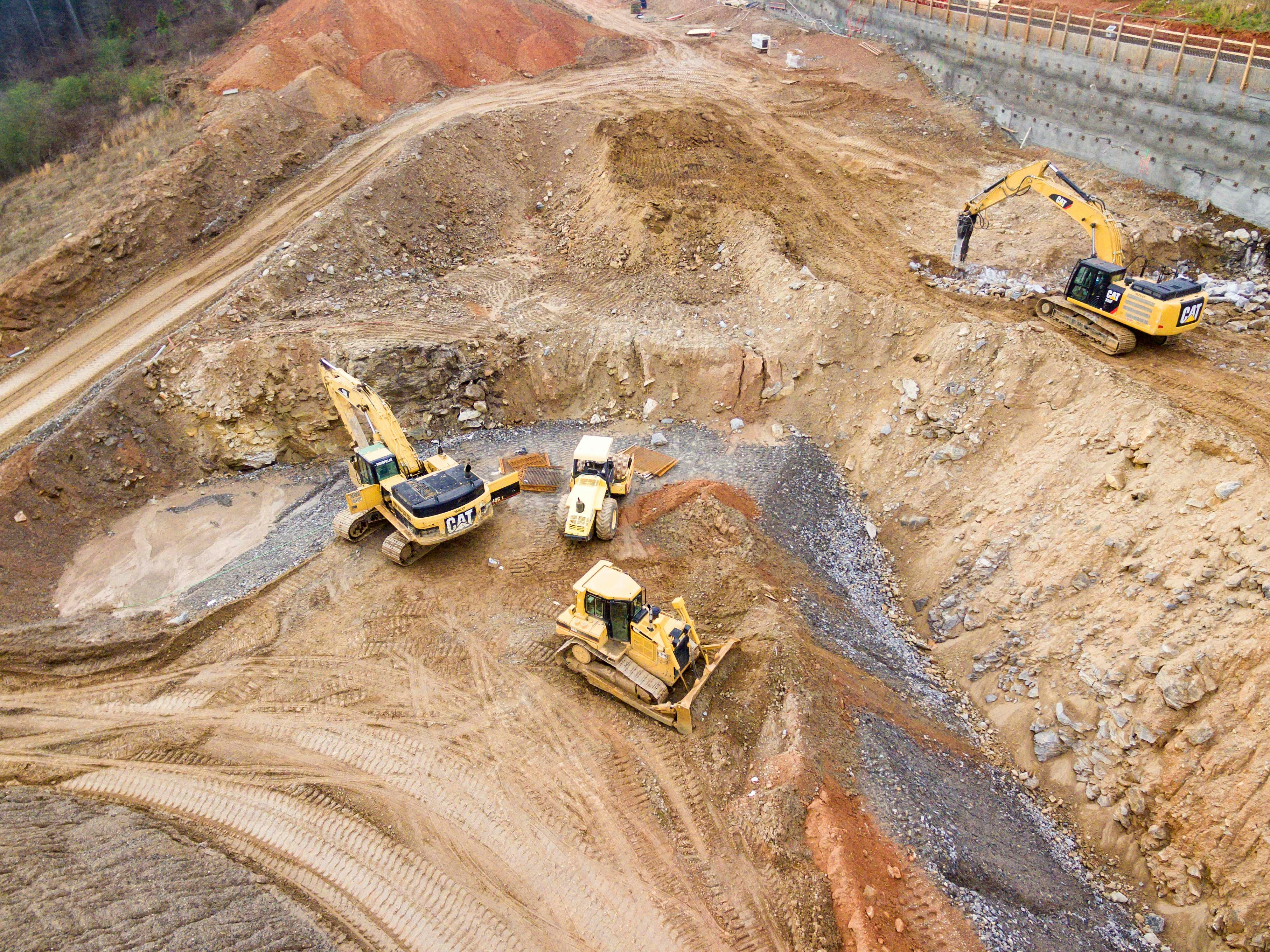
Initial earthmoving to achieve approximate elevations and slopes. Rough grading removes excess material or adds fill to bring the site to within a few inches of final elevations, accounting for Palm Beach County's high water table and coastal soil conditions.
Fine Grading
Precise grading work using laser-guided equipment to achieve exact elevations specified in engineering drawings, typically within 0.1 feet of specified elevations. Fine grading creates the exact slopes and contours required, ensuring Base Flood Elevation (BFE) compliance and flood zone requirements.
Soil Compaction
Proper compaction of building pad soils to meet Palm Beach County building code requirements for foundation support. Compaction testing ensures soils meet specified density requirements, accounting for Palm Beach County's unique soil characteristics including limestone bedrock and sandy soils.
Drainage Preparation
Grading includes proper slopes and drainage features to direct water away from the building pad and prevent water accumulation around foundations, essential given Palm Beach County's high water table and frequent heavy rainfall, with compliance to SFWMD Environmental Resource Permit requirements.
Final Inspection Preparation
Coordination of final grading inspections with Palm Beach County Building Division or municipal building departments to ensure the building pad meets all engineering specifications, Base Flood Elevation (BFE) requirements, and is ready for foundation construction.
Palm Beach County Building Pad Considerations
Building pad grading in Palm Beach County requires specialized knowledge of local conditions and regulatory requirements:
- Base Flood Elevation (BFE) Compliance: Properties in flood zones (AE, VE, or X) must have building pads graded to specific elevations above Base Flood Elevation (BFE) as required by FEMA and Palm Beach County building codes. Many Palm Beach County properties are in flood zones, particularly in coastal areas like Palm Beach, Jupiter, and West Palm Beach.
- High Water Table: Palm Beach County's high water table, which can be within 2-3 feet of the surface in many areas, affects grading depth and compaction. Proper dewatering may be required, and building pads may need to be elevated above the water table for foundation stability. SFWMD Environmental Resource Permits are required for dewatering activities affecting state waters. This is especially important in areas like Palm Beach, Jupiter, and coastal neighborhoods.
- Coastal Soil Conditions: Coastal areas in Palm Beach County including Palm Beach, Jupiter, and Juno Beach have unique soil characteristics including limestone bedrock, sandy soils, and organic materials. Building pad grading must account for these conditions and may require specialized compaction techniques.
- Building Division Permits: Building pad grading requires Building Division permits from Palm Beach County Building Division. Building permits must be obtained before beginning construction, and the Building Division reviews plans to ensure compliance with the Florida Building Code and Palm Beach County requirements.
- Environmental Resources Management (ERM): Building pad grading may require Environmental Resources Management (ERM) review for projects affecting wetlands, protected species, or environmentally sensitive areas. ERM ensures that proposed developments comply with the Unified Land Development Code (ULDC) and environmental protection requirements.
- Development Permits: Projects involving development work as described in Florida Statute 380.04 require a development permit prior to the issuance of a building permit. This is a critical prerequisite for building pad grading projects in Palm Beach County.
- Unified Land Development Code (ULDC): Palm Beach County's Unified Land Development Code (ULDC) regulates environmental activities and enforces requirements for development in environmentally sensitive areas, including flood zones and stormwater management systems. Building pad grading must comply with these requirements.
- SFWMD Environmental Resource Permits: Building pad grading affecting state waters and wetlands requires SFWMD Environmental Resource Permits. As of June 28, 2024, new water quality performance standards were implemented. We coordinate permit applications and ensure compliance throughout operations.
- Stormwater Management: Building pad grading must incorporate proper drainage and stormwater management to meet SFWMD Environmental Resource Permit requirements and Palm Beach County Unified Land Development Code (ULDC) standards. Pads must be graded to direct water away from structures, essential given Palm Beach County's flat topography and heavy rainfall.
- Engineering Specifications: Building pads must be graded to exact elevations and slopes specified in engineering drawings, typically within 0.1 feet of specified grades. A site plan and grading plan, prepared by a licensed surveyor or engineer, must be submitted with the building permit application showing proposed pad elevation relative to BFE.
- Tree Protection Requirements: Palm Beach County requires tree protection for development activities, particularly important in established neighborhoods. Protected trees must be identified and preserved according to county standards, with Environmental Resources Management (ERM) review required for tree removal in environmentally sensitive areas.
- Permit Processing: Palm Beach County permit processing times vary based on project complexity and Environmental Resources Management (ERM) review requirements. Building Division and ERM review can add time to projects. We coordinate permit applications to minimize delays.
Palm Beach County Building Pad Grading Neighborhoods
We coordinate building pad grading services throughout Palm Beach County, including:
Luxury Residential Areas
- Downtown West Palm Beach
- El Cid
- Grandview Heights
- Palm Beach
- Jupiter
Coastal and Waterfront
- Palm Beach Gardens
- Juno Beach
- Tequesta
- Boca Raton
- Delray Beach
Growing Suburban Communities
- Wellington
- Royal Palm Beach
- The Acreage
- Loxahatchee
- Greenacres
Commercial Districts
- Boynton Beach
- Lake Worth
- Lantana
- Belle Glade
- Pahokee
The Building Pad Grading Process in Palm Beach County
Our coordinated approach ensures your building pad meets all specifications and regulatory requirements in Palm Beach County:
- Project Review: We review your engineering drawings, survey data, and site plans to understand grading requirements, identify challenges, and determine the scope of work needed, including Base Flood Elevation (BFE) analysis and flood zone requirements.
- Development Permit Coordination: We help identify required development permits as described in Florida Statute 380.04, which must be obtained prior to the issuance of building permits for building pad grading projects in Palm Beach County.
- Palm Beach County ERM Coordination: We help identify required Environmental Resources Management (ERM) review and coordinate with Palm Beach County ERM to ensure proposed building pad grading projects comply with the Unified Land Development Code (ULDC) and environmental protection requirements.
- Palm Beach County Permit Coordination: We help identify required grading permits including Building Division permits, SFWMD Environmental Resource Permits for activities affecting state waters and wetlands, Unified Land Development Code (ULDC) compliance, and coordinate with regulatory agencies. We coordinate with Palm Beach County Building Division, ERM, SFWMD, and other regulatory agencies as needed.
- Contractor Selection: We match your project with licensed contractors who have the right equipment (graders, compactors, laser-guided systems) and experience for precise building pad grading in Palm Beach County, including expertise with high water table conditions, flood zone requirements, and coastal soil conditions.
- Rough Grading: Contractors perform initial earthmoving to achieve approximate elevations. This may involve cut and fill operations to balance site grades and bring the pad area to approximate final elevations, accounting for Palm Beach County's high water table and coastal soil conditions.
- Fine Grading: Precise grading work using laser-guided equipment to achieve exact elevations and slopes specified in engineering drawings, typically within 0.1 feet of specified grades. Fine grading ensures Base Flood Elevation (BFE) compliance and flood zone requirements.
- Compaction: Proper soil compaction using rollers and compactors to achieve required density for foundation support. Compaction testing ensures soils meet Palm Beach County building code requirements, accounting for unique soil characteristics including limestone bedrock and sandy soils.
- Final Inspection: We coordinate final grading inspections with Palm Beach County Building Division or municipal building departments and engineers to ensure the building pad meets all specifications, Base Flood Elevation (BFE) requirements, and is ready for foundation construction.
Frequently Asked Questions
What is Base Flood Elevation (BFE) and why is it important for building pads in Palm Beach County?
Base Flood Elevation (BFE) is the elevation to which floodwater is anticipated to rise during a base flood (1% annual chance flood). Properties in flood zones (AE, VE, or X) must have building pads graded to elevations above BFE as required by FEMA and Palm Beach County building codes. Many Palm Beach County properties, particularly in coastal areas like Palm Beach, Jupiter, and West Palm Beach, are in flood zones. This is critical for flood insurance and code compliance.
How much does building pad grading cost in Palm Beach County?
Building pad grading costs in Palm Beach County vary based on pad size, site conditions, flood zone requirements, required earthwork, and compaction requirements. Typical residential building pads range from $25,000 to $75,000, while commercial pads can range from $50,000 to $200,000+ depending on scope. Flood zone requirements, high water table conditions, and the need for significant fill material can increase costs. Projects in areas like Palm Beach or Jupiter often require more extensive work due to elevation requirements. Palm Beach County permit processing, including ERM review, can add time and costs.
What permits are required for building pad grading in Palm Beach County?
Building pad grading in Palm Beach County requires development permits (Florida Statute 380.04) obtained prior to building permit issuance, Building Division permits from Palm Beach County Building Division, Environmental Resources Management (ERM) review for projects affecting wetlands or environmentally sensitive areas, SFWMD Environmental Resource Permits for activities affecting state waters and wetlands, Unified Land Development Code (ULDC) compliance, and FEMA compliance permits for properties in flood zones. We help identify and coordinate all required permits.
How precise does building pad grading need to be in Palm Beach County?
Building pad grading in Palm Beach County must achieve elevations within 0.1 feet (1.2 inches) of specified elevations in engineering drawings. Slopes must match specified grades exactly. This precision is critical for foundation stability and code compliance. For properties in flood zones, the building pad must be graded to at least the Base Flood Elevation (BFE) plus any required freeboard. Our contractors use laser-guided grading equipment to achieve this precision.
How does Palm Beach County's high water table affect building pad grading?
Palm Beach County's high water table, which can be within 2-3 feet of the surface in many areas, requires specialized dewatering techniques and foundation design. Building pads may need to be elevated above the water table for foundation stability. SFWMD Environmental Resource Permits are required for dewatering activities affecting state waters. Proper drainage systems are essential to prevent water accumulation around foundations. This is especially important in areas like Palm Beach, Jupiter, and coastal neighborhoods where the water table is particularly high.